

Pete Buttigieg recently said something Democrats should take very seriously heading into the midterms: winning may not be enough. The margin could matter almost as much as the victory itself.
The phrase being used is “too big to rig.” Taken literally, that can sound conspiratorial, so let’s be very clear about what we are talking about. There is no secret machine magically changing votes overnight. There is no evidence of some electronic switch that can simply flip an election from one party to another.
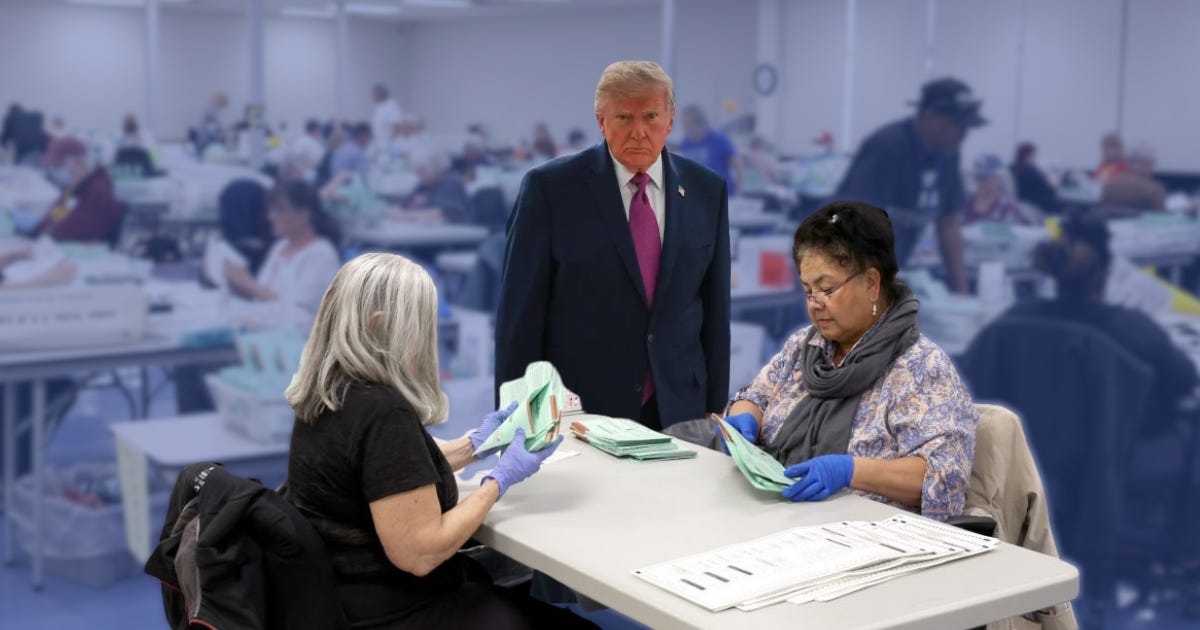
The concern is much more straightforward. Donald Trump and his allies have repeatedly attacked the rules and institutions surrounding elections, and a close result creates opportunities for litigation, challenges, delays and disputes that a decisive result simply does not.
That is why the size of the victory matters.
The danger of a razor-thin margin
Imagine control of the House comes down to one or two seats. Or imagine control of the Senate depends on a single race.
Suddenly, one disputed election becomes enormously important. A lawsuit in one state matters more. A delayed certification matters more. A fight over a particular category of ballots matters more. One decision involving one seat could determine which party controls an entire chamber of Congress.
Now imagine Democrats instead win dozens of additional House seats.
The situation changes dramatically. Even if Republicans successfully challenge one race, or two races, or somehow manage to create chaos around a handful of contests, it does not change control of the chamber.
The same principle applies to the Senate. If everything hinges on whether one party has 50 seats or 51, a single disputed race carries extraordinary weight. If the margin is larger, there are fewer pressure points available to exploit.
That is the practical meaning of making an election “too big to rig.”
The groundwork is already being laid
None of this requires speculating about what Trump might secretly be planning. There is plenty happening out in the open.
Trump has called for Republicans to “nationalize” voting and take over elections in certain places, even though elections in the United States are primarily administered by state and local governments. His administration has also faced scrutiny over the possibility of federal agents appearing near polling locations. The administration has said there are no plans for a broad deployment, while Trump himself has declined to categorically rule out federal enforcement activity around the election.
Meanwhile, election officials around the country are preparing for potential legal disputes, federal intervention and misinformation surrounding the midterms.
The important point is that voters do not need to imagine some fantastical conspiracy. The fights over election administration are already happening publicly.
There is also a political permission structure being built before the votes have even been counted.
Question mail-in ballots. Question the voter rolls. Question how long counting takes. Suggest Democratic states cannot be trusted. Raise suspicions about noncitizen voting. Then, if Republicans lose, an explanation for the loss has already been prepared.
We have seen a version of this before.
We know what happened after 2020
After Trump lost the 2020 presidential election, he claimed the election had been stolen despite failing to provide evidence sufficient to substantiate that claim.
He pressured Georgia officials over the state’s results. His allies backed an effort involving alternate slates of electors. He pressured Vice President Mike Pence over certification.
That history matters because the closer an election is, the more consequential these kinds of challenges can become.
We also saw a much smaller example of the power of procedural delay with Representative Adelita Grijalva. After winning her special election in Arizona, her swearing-in was delayed for 50 days. The timing was particularly notable because a petition to force a House vote on the Epstein files sat just one signature short of the 218 needed to move forward, and Grijalva had pledged to be that final signature. Grijalva later introduced legislation intended to prevent similar delays in the future.
Now imagine something like that happening when control of the House depends on one or two members.
A disputed race here, a delayed seating there, a lawsuit somewhere else, and suddenly an election decided by millions of voters becomes a battle over a tiny number of pressure points.
A larger margin makes that strategy much harder.
Lawyers are good. Voters are better.
There will absolutely be lawyers ready to respond to election challenges. Voting rights groups should be prepared. Election officials should know the law and be ready for attempts to interfere with the process.
But there is another defense available to voters themselves: overwhelming participation.
Spending the final weeks before an election endlessly refreshing polls accomplishes nothing. Assuming someone else has the election covered accomplishes nothing. House races matter. Senate races matter. Governors matter. State legislatures matter.
The more decisive the result, the less leverage there is for anyone trying to manufacture doubt around a handful of races.
A one-seat margin creates an obvious target. A 30- or 40-seat margin creates a very different problem for anyone hoping to reverse control of Congress through individual challenges.
They can still claim the election was rigged. We already know election fraud allegations do not necessarily disappear simply because the evidence fails to support them. But claiming dozens of separate elections across the country were somehow manipulated becomes increasingly difficult to turn into an actionable strategy.
The ultimate backstop
Buttigieg also raised a broader question that is worth thinking about beyond 2026: What is the ultimate backstop for democracy?
Is it Congress?
Is it the courts?
Ultimately, democratic institutions function because enough people participate in them and insist that election results be respected.
Courts can enforce laws. Attorneys can challenge abuses. Election officials can follow procedures. Congress can certify results. All of those institutions matter enormously.
But voters determine how much ambiguity exists for bad actors to exploit in the first place.
If control of Congress comes down to a single contested race, that ambiguity can become incredibly powerful. If voters deliver a decisive result across dozens of races and multiple states, the number of plausible avenues for overturning the broader outcome shrinks dramatically.
That is the real argument behind “too big to rig.”
The goal should be an election result so decisive that attempts to manufacture uncertainty cannot realistically change who controls Congress.
So what do you think? How much does the possibility of post-election challenges change the way you’re thinking about the midterms?
We’re reaching over 150 million people every month across YouTube, podcasts, Substack, and beyond. But algorithms can change. Platforms can fold. And when that happens, this newsletter is how we stay connected.
If you’re not yet a paid subscriber, please consider joining.
If you’re already paid on one platform, consider supporting us on both Substack and our website.
You can subscribe on our website and right here on Substack.
And if you’re really on fire, consider gifting a subscription—we’ve got thousands on our waiting list ready to read, watch, and fight back.
Let’s keep building.
—David
PS: Can’t contribute right now? No problem. You can support us for free by subscribing on YouTube, listening to our audio podcast on Spotify or Apple Podcasts, or become a free subscriber to this very Substack. Every bit counts.
NOBODY CAN MISS THIS VOTE!! IF YOU ARE 18 YEARS OLD OR BETTER, UOU NEED TO VOTE OR ELSE YOU COULD BE SITTING YOURSELF UP FOR A MAJOR ASS FUCKING!! 😲😲😳😳 GO VOTE!! 😲
No shit RE: this. Democracy groups are hopefully running scenarios for this