

There’s a familiar rhythm developing, and it’s not subtle anymore.
A major media outlet reports something unfavorable. A Trump ally denies it. Then, instead of rebutting the facts, they reach for something else entirely: a lawsuit.
The latest example comes from Kash Patel, now serving as FBI director under Donald Trump, who has filed a $250 million defamation lawsuit against The Atlantic over a report detailing serious allegations about his conduct in office.
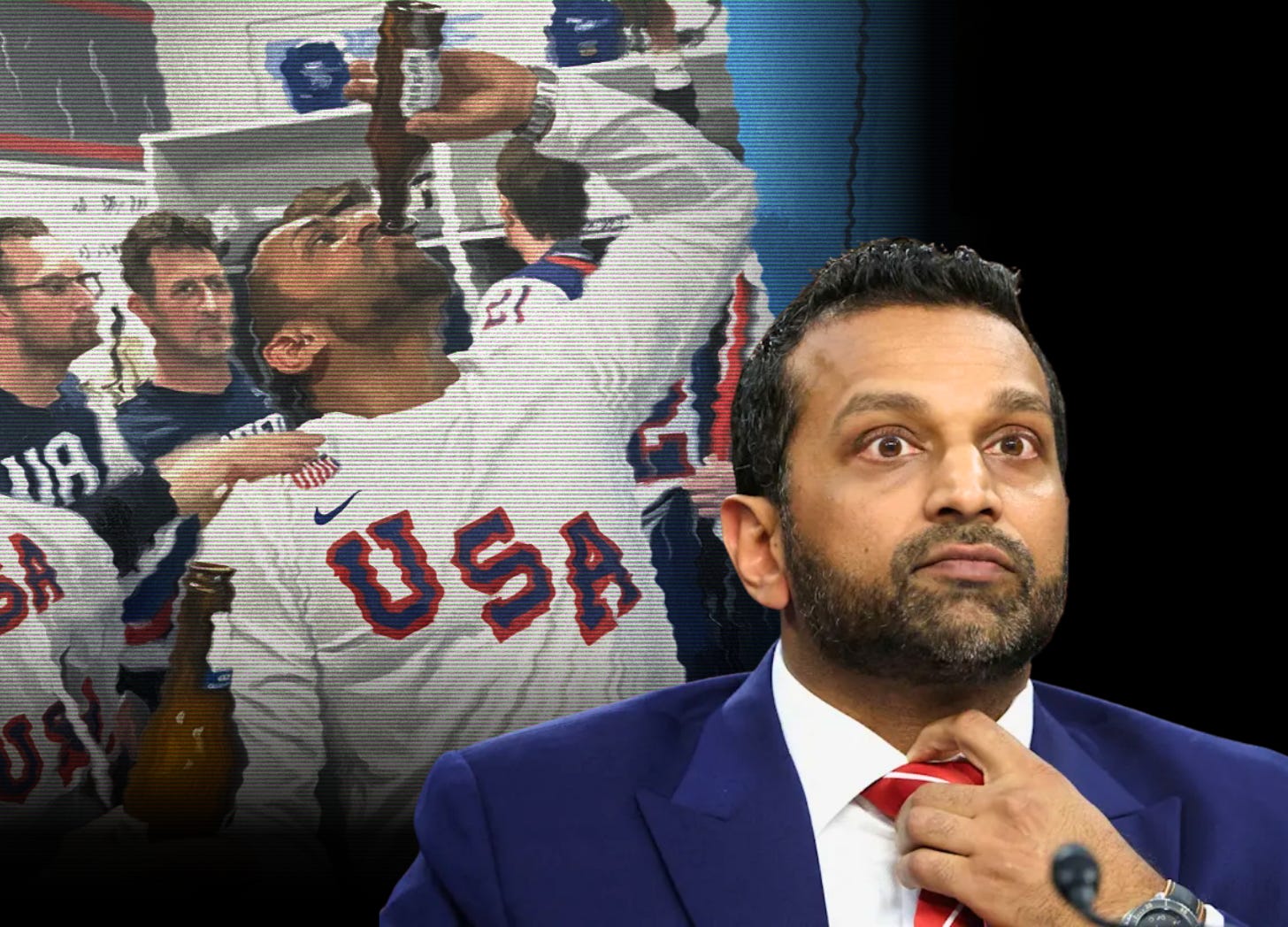
The article, based on interviews with current and former officials, claimed Patel engaged in heavy drinking, erratic behavior, and periods of unavailability that raised concerns inside the bureau. It also alleged that his conduct at times affected scheduling and access to him during critical moments.
Patel has denied the claims and is now suing, calling the story a fabricated and malicious attack meant to damage his reputation. He’s seeking hundreds of millions in damages, while The Atlantic says it stands by its reporting.
But zoom out for a second, because the individual details almost matter less than the pattern.
This is not happening in isolation.
The pattern is the point
Lawsuits have become a go-to move across the Trump orbit, including by Donald Trump himself, to intimidate and silence the press.
It’s a strategy with a few clear goals:
Make journalism more expensive by forcing outlets into legal defense
Deter future reporting by raising the risk of lawsuits
Shift the narrative from “is this true?” to “they’re attacking us unfairly”
And importantly, it plays well politically. For an audience already primed to distrust the press, every lawsuit becomes “proof” that the media is corrupt, even when the claims themselves don’t hold up.
We’ve seen versions of this before, but the scale and frequency are changing. This is becoming a governing approach, not just a campaign tactic.
Karoline Leavitt says the quiet part out loud
If there were any doubt about the broader strategy, comments from Karoline Leavitt last night help clarify it.
In a clip circulating online, Leavitt tells viewers that if they “want the truth,” they should not read The New York Times, The Wall Street Journal, or watch CNN.
That’s not a critique of a specific article. It’s not even a selective criticism.
It’s a blanket dismissal of major news institutions.
At the same time, she praises Trump’s negotiating tactics and contrasts them with the “horrific deal” under Barack Obama. That framing isn’t new, but the delivery matters.
The message is simple: don’t trust independent verification, trust us.
And when that message is paired with lawsuits like Patel’s, the strategy becomes clearer. Discredit the media rhetorically. Punish them legally.
This is bigger than one lawsuit
It would be easy to treat the Patel lawsuit as just another media dispute. These happen. Reporting gets challenged. Courts sort it out.
But that framing misses what’s actually going on.
When lawsuits, public attacks, and messaging campaigns all point in the same direction, it stops being about correcting errors and starts being about controlling the information environment.
A free press is not supposed to be comfortable. It’s supposed to ask questions that people in power don’t like.
And when the response to that is legal threats and coordinated discrediting, it raises a bigger question: What happens when journalists start deciding a story isn’t worth the risk?
Why this matters and what we’re doing
This is exactly why independent media matters.
At a time when powerful figures are trying to shape the narrative by force, by lawsuits, or by simply telling people to ignore entire institutions, the need for independent voices becomes more urgent, not less.
On The David Pakman Show, we focus on breaking down the headlines, separating fact from spin, and calling out what’s actually happening, even when it’s uncomfortable.
No shouting. No conspiracy theories. No pretending everything is fine when it clearly isn’t.
Sure, they can still try to sue us, silence us, or even revoke my naturalized citizenship. But we don’t answer to billion-dollar boardrooms.
We answer to you.
If you’ve ever thought, “I just want someone to keep saying what needs to be said,” that’s us. But we can’t keep doing it without your support.
We’re reaching over 150 million people every month across YouTube, podcasts, Substack, and beyond. But algorithms can change. Platforms can fold. And when that happens, this newsletter is how we stay connected.
If you’re not yet a paid subscriber, please consider joining.
You can subscribe on our website or right here on Substack.
And if you’re really on fire, consider gifting a subscription—we’ve got thousands on our waiting list ready to read, watch, and fight back.
Can’t contribute right now? No problem. You can support us for free by subscribing on YouTube, listening to our audio podcast on Spotify or Apple Podcasts, or become a free subscriber to this very Substack. Every bit counts.
Let’s keep building.
—David
there’s no such thing as bad press. i mean if you’re patel, yeah it’s bad press. but for the atlantic i can only assume this ridiculous lawsuit is driving up it’s readership. the only weapon the free press has against these asshats is to flaunt the lawsuit. make the lawsuit the story. this fool flew to italy on our dime and got hammered in a locker room for the entire world to witness. you can’t get more alcoholics authenticated than that.
Leavit should be sued by the news org s she defamed