

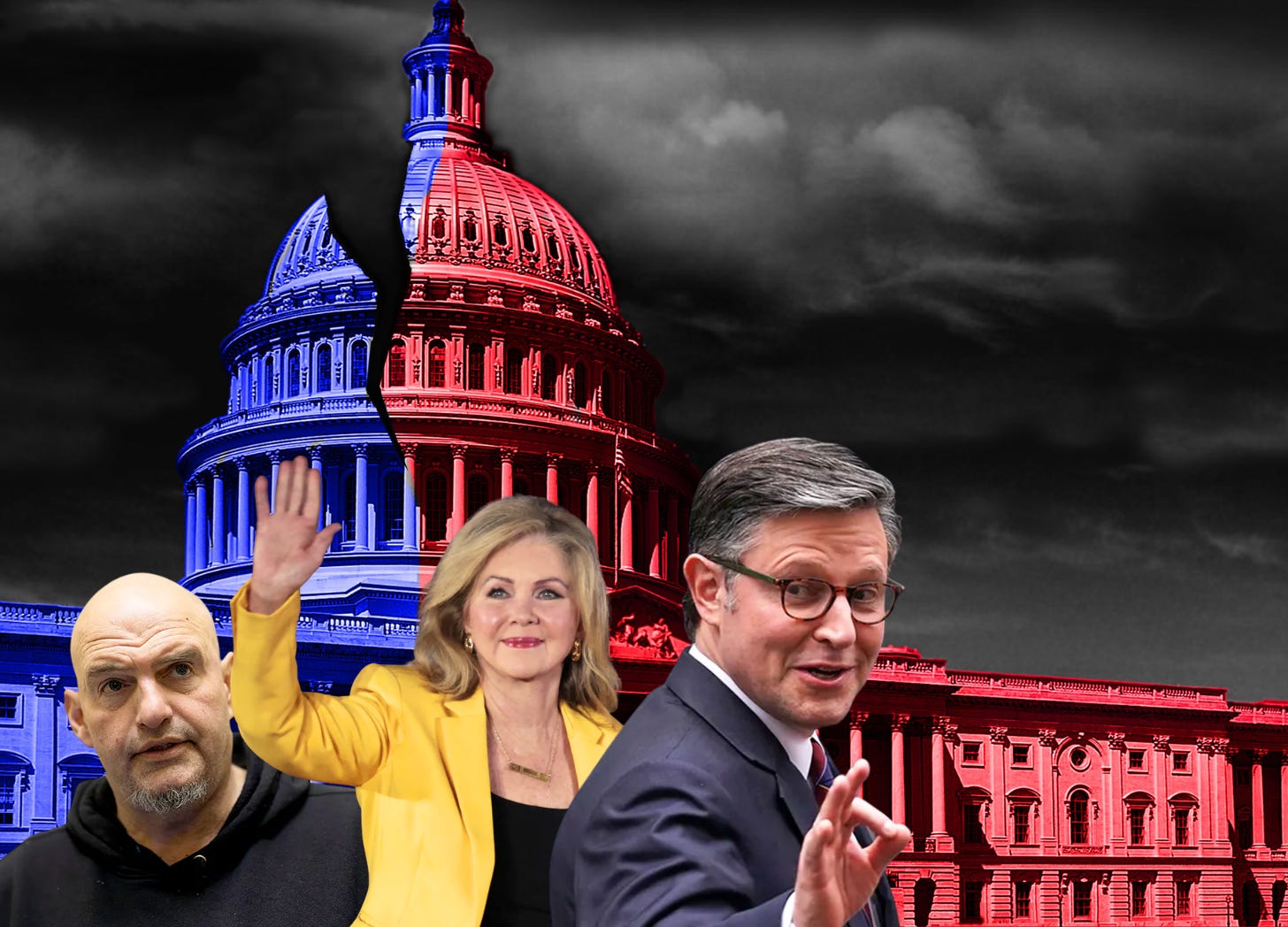
Most politicians don’t care about you.
I know that sounds harsh. It sounds cynical. And for a lot of people, it’s the kind of statement that makes them want to tune out of politics altogether.
But if we’re being honest about how the system actually works, it’s very difficult to argue with.
Every election cycle, every campaign speech, every polished piece of messaging is built around the same idea: they care deeply about your life, your future, your struggles.
In reality, most of them are primarily focused on something else entirely.
Getting elected and staying elected.
And once you understand that, a lot of what looks confusing in politics starts to make sense.
The incentive problem
Think about how often politicians seem to contradict themselves.
One week they hold a strong position. The next week, it shifts. Sometimes completely.
We see this constantly. Positions on war, on social issues, on economic policy. Statements that appear firm suddenly become flexible the moment polling changes.
If your primary goal is to win elections, then your guiding principle isn’t ideology. It’s what works, what resonates, and what gets votes right now.
That doesn’t mean there are no exceptions.
There are people in politics who genuinely believe what they’re saying and are trying to move policy in a direction they think is better. You can point to figures across the political spectrum who fit that description.
But the system itself doesn’t reward that nearly as much as it rewards adaptability.
And “adaptability” is often just a nicer way of saying: say what the audience wants to hear.
Voters are part of this too
There’s an uncomfortable truth here that doesn’t get talked about enough.
Voters say they want authenticity. They say they want consistency. They say they value honesty.
But in practice, many respond to messaging that simply feels good in the moment.
That creates a feedback loop.
Politicians test messages, run focus groups, analyze polling, and micro-target content. If something works, they lean into it. If it doesn’t, they pivot.
It becomes less about conviction and more about performance.
And over time, that performance becomes obvious. Even if people can’t quite articulate it, they start to sense that something is off.
Ironically, the politicians trying to appeal to everyone often end up feeling the least genuine.
The “everyone else is bad” illusion
Here’s another dynamic that tells us something important:
Congress, as an institution, has very low approval ratings. People broadly agree that politicians are disingenuous, self-interested, and out of touch.
At the same time, individual representatives often have much higher approval among their own constituents.
In other words, people tend to believe:
Most politicians are terrible.
My politician is one of the good ones.
But mathematically, that doesn’t really hold up.
It’s similar to how most people think they’re above-average drivers. The numbers don’t work, but the perception persists.
That gap between how we view the system and how we view our preferred individuals allows the broader problem to continue.
When consistency stops mattering
There was a time when contradictions and double standards could seriously damage a politician.
That’s much less true today.
For many voters, what matters most is whether a politician reinforces their worldview. If the messaging aligns with what they already believe, inconsistencies become easier to ignore.
This is part of why you see politicians take positions that would have been politically damaging in the past and suffer little consequence.
Being wrong doesn’t carry the same cost. Being inconsistent doesn’t carry the same cost.
As long as the messaging lands with the right audience, that’s often enough.
It’s not just politicians
This incentive structure doesn’t stop with elected officials.
It extends to the broader media ecosystem, especially online.
Content creators, commentators, and influencers are also operating within a system driven by engagement. Views, clicks, watch time, subscriptions.
If outrage performs, outrage gets amplified.
If fear performs, fear gets amplified.
There is a constant pull toward the most emotionally charged version of any story because that’s what the algorithms reward.
And just like with politicians, there are exceptions. There are people trying to be measured, honest, and accurate even when that approach doesn’t maximize engagement.
But the broader system pushes in the opposite direction.
Understanding the system
This is a harsh critique. It does not apply to everyone.
But it applies to enough people that it fundamentally shapes how politics operates.
Once you recognize that the primary incentive is power and attention, a lot of behavior that once seemed confusing becomes predictable.
Why politicians shift positions.
Why messaging feels inconsistent.
Why certain narratives get amplified while others don’t.
It’s not random.
It’s structural.
And understanding that doesn’t mean you disengage from politics. If anything, it should make you more discerning about the messages you’re receiving and the people delivering them.
So the real question is this:
Who do you think this applies to?
And just as importantly:
Who do you think it doesn’t?
We’re reaching over 150 million people every month across YouTube, podcasts, Substack, and beyond. But algorithms can change. Platforms can fold. And when that happens, this newsletter is how we stay connected.
If you’re not yet a paid subscriber, please consider joining.
If you’re already paid on one platform, consider supporting us on both Substack and our website.
You can subscribe on our website and right here on Substack.
And if you’re really on fire, consider gifting a subscription—we’ve got thousands on our waiting list ready to read, watch, and fight back.
Let’s keep building.
—David
PS: Can’t contribute right now? No problem. You can support us for free by subscribing on YouTube, listening to our audio podcast on Spotify or Apple Podcasts, or become a free subscriber to this very Substack. Every bit counts.
I'm from Arizona, and Senators Kelly and Gallego are amazing!
(Fakes being surprised) 😮