

Hey folks, I covered a story on the show this week that I knew would get some attention, but I didn’t expect it to go quite as viral as it did. I wanted to spend a little more time on it here because I think it says something important about how the political landscape is changing in Texas and why elections matter.
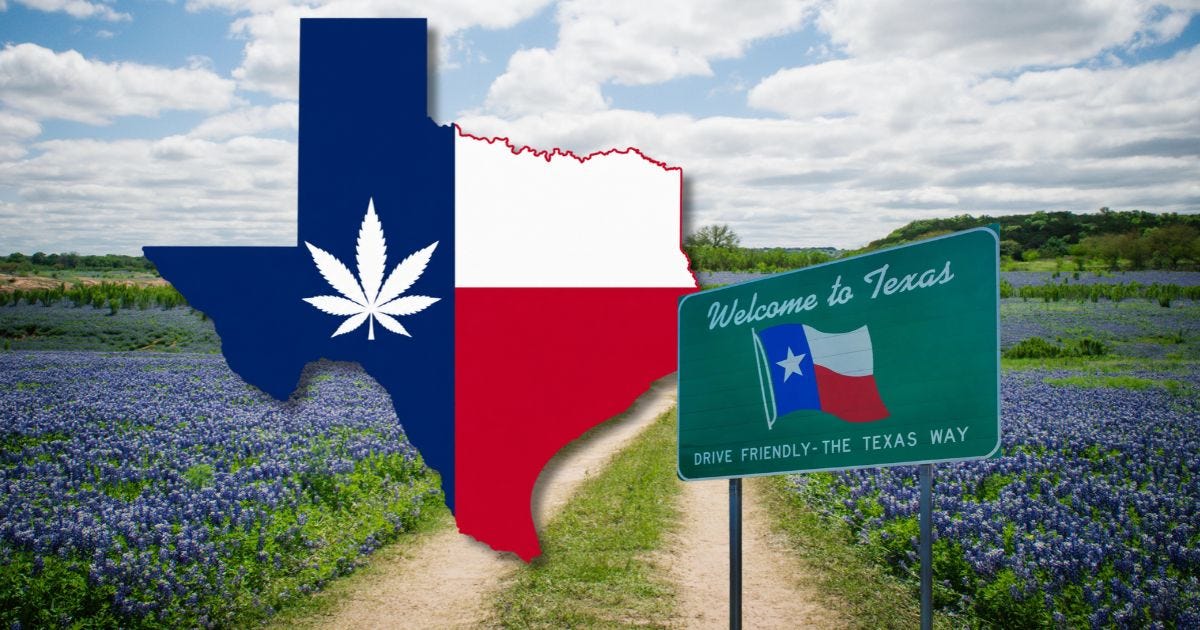
Just over a week after Democrats pulled off a massive electoral victory in Texas, something that would have seemed almost unimaginable a month ago is already happening. Texas Democrats are moving to legalize recreational cannabis.
And we’re talking about full recreational legalization. Licensed dispensaries, home cultivation, a regulated commercial market, and a system for taxing cannabis sales.
If you had told me a month ago that Texas Democrats would be preparing to legalize recreational marijuana by November, I would have been extremely skeptical. Regardless of what happened in the November 3 elections, I would not have expected the political landscape in Texas to change this dramatically, this quickly.
But here we are.
And the proposals now being introduced tell us something important about how much elections can change the political conversation, even before newly elected officials take office.
What Democrats are proposing
On Monday, the first day lawmakers could file legislation for the 2027 session, Democratic state Representatives Joe Moody and John Bucy introduced nearly identical bills called the Texas Regulation of Cannabis Act.
The proposals would allow adults 21 and older to possess up to two ounces of cannabis, including 15 grams of concentrate, and grow up to 12 plants at home. Texas would also establish a regulated commercial market with licensed businesses handling production, testing, distribution, and sales, similar to systems in Colorado and Massachusetts.
The legislation includes a 20 percent retail cannabis tax on top of existing sales taxes, plus a 15 percent tax on transfers from producers to dispensaries. Half the revenue would fund public schools, 25 percent would support veterans, 15 percent would go toward drug treatment programs, and 10 percent to local governments.
Now, there is a legitimate concern about excessive taxation. If legal cannabis becomes too expensive, consumers may continue buying from the illegal market, undermining the goal of creating a safer, regulated industry with proper testing and oversight.
But the broader concept makes sense. Instead of spending public resources arresting people for cannabis possession, Texas could regulate the industry, collect revenue, and invest that money in schools and other areas that desperately need funding.
Whether these bills ultimately pass remains uncertain, but the fact that Texas lawmakers are seriously considering comprehensive legalization is remarkable.
How the election changed everything
The November 3 elections fundamentally changed the balance of power in Texas. James Talarico won a U.S. Senate seat, Gina Hinojosa defeated longtime Republican Governor Greg Abbott, and Vikki Goodwin unseated Lieutenant Governor Dan Patrick. Democrats also took control of the Texas House for the first time in more than two decades.
Patrick’s defeat is particularly significant for cannabis legalization. He was one of the state’s most aggressive opponents of legal THC products, championing efforts to ban them and using his influence over the state Senate to block reform.
His replacement, Vikki Goodwin, has taken a dramatically different approach. She previously proposed using cannabis tax revenue to fund a state-administered health insurance option and has suggested expanding medical marijuana access or legalizing recreational cannabis altogether.
Think about that. Texas is going from a lieutenant governor who aggressively opposed cannabis reform to one openly discussing how legalization could help fund health care.
And this isn’t some fringe position held by a handful of progressive Democrats in Austin. Polling shows widespread support among Texans for recreational legalization, with even stronger support for decriminalization and expanded medical access.
The public support was already there. The election has now created an opportunity for lawmakers to act on it.
More proposals are already emerging
The bills introduced by Moody and Bucy are only part of the picture.
Democratic Senator Carol Alvarado has a separate legalization proposal that would permit possession of up to 2.5 ounces of cannabis, with a different approach to taxation and regulation.
Representative Mihaela Plesa has also introduced legislation focused on expanding medical marijuana access.
So we’re already seeing multiple approaches to cannabis reform being put on the table.
Some lawmakers are pursuing full recreational legalization. Others are focused on expanding medical access. There are differences over possession limits, taxation, and the regulatory structure.
That’s what a serious legislative debate should look like.
And it is happening just days after an election that completely changed what Democrats believe they can accomplish in Texas.
The obstacles that remain
Now, this doesn’t mean recreational marijuana is about to become legal in Texas. Significant obstacles remain, particularly the Republican-controlled state Senate, where lawmakers could block legalization or substantially weaken the proposals.
The newly elected Democrats haven’t even taken office yet, and the next legislative session doesn’t begin until January 12. Filing legislation is one thing. Getting it through both chambers is another, and that could require significant negotiation and compromise.
But what’s remarkable is that lawmakers are already introducing proposals that would have been extremely difficult to advance under the previous leadership. Democrats now control the governorship, lieutenant governorship, and state House, fundamentally changing what policies can realistically be considered.
There are no guarantees, but the election has opened the door to reforms that seemed politically impossible just weeks ago.
A new political reality in Texas
We’re barely more than a week removed from the election, the new administration hasn’t taken office, and Texas lawmakers are already debating whether cannabis should be treated as a criminal justice issue or regulated as a legal product for adults.
And I think that is phenomenal news.
Regardless of whether these bills pass, there’s a broader lesson here about the importance of elections. Beyond changing who holds office, elections can fundamentally change what people believe is politically possible.
Just weeks ago, recreational marijuana legalization in Texas seemed extremely unlikely. Now lawmakers are discussing comprehensive legalization, tax revenue for schools and veterans, and an entirely new regulatory system.
That shift can inspire activists, encourage political participation, and create momentum for reforms that previously seemed impossible.
There are still significant obstacles, particularly the Republican-controlled Senate. But in just eight days, the political conversation in Texas has changed dramatically.
For a state where Republican leadership spent years opposing cannabis reform, that alone is an extraordinary development.
So what do you think? Is Texas actually on the verge of legalizing recreational marijuana, or will Republicans in the state Senate find a way to stop it?
We’re reaching over 150 million people every month across YouTube, podcasts, Substack, and beyond. But algorithms can change. Platforms can fold. And when that happens, this newsletter is how we stay connected.
If you’re not yet a paid subscriber, please consider joining.
If you’re already paid on one platform, consider supporting us on both Substack and our website.
You can subscribe on our website and right here on Substack.
And if you’re really on fire, consider gifting a subscription—we’ve got thousands on our waiting list ready to read, watch, and fight back.
Let’s keep building.
—David
PS: Can’t contribute right now? No problem. You can support us for free by subscribing on YouTube, listening to our audio podcast on Spotify or Apple Podcasts, or become a free subscriber to this very Substack. Every bit counts.
We have the Willie Nelson wing of the Texas Democratic Party to thank for moving forward on recreational marijuana in the state of Texas.
Now do abortion care for women