

Before we get into it: if you’re receiving this via email, thank you. You’re already subscribed. If you’re not, now is the time.
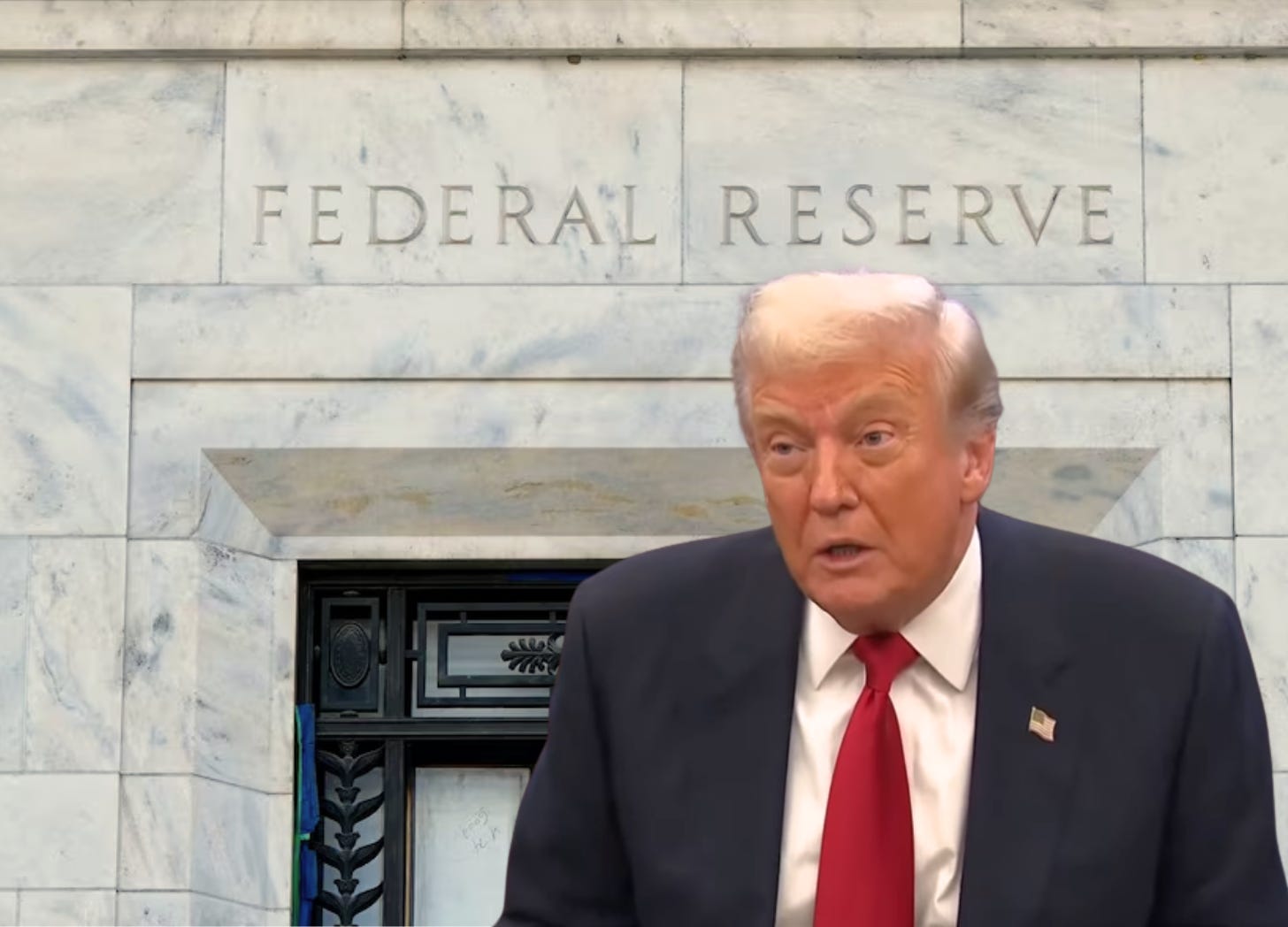
Something genuinely important just happened at the Federal Reserve, and it quietly undercuts one of Donald Trump’s biggest pressure points.
It wasn’t loud or dramatic, but that’s why it worked.
In a move that flew largely under the radar, the Federal Reserve reappointed 11 of its 12 regional bank presidents months before their terms were set to expire. That timing is the key, and it was no accident.
What the Fed did, and why it matters
Normally, these reappointments happen close to the end of a term. It is routine and boring and almost nobody notices.
But this time, the Fed moved early, quietly and unanimously. Why?
Because Donald Trump has been escalating his attacks on the Federal Reserve for years, particularly on Chair Jerome Powell. Trump wants faster and deeper interest rate cuts and he wants them now.
His allies have not been subtle about it. They have floated proposals designed to reshape the Fed from the inside. One example was a suggestion from Trump’s Treasury Secretary that regional Fed presidents should be required to live in their districts for three years. That sounds like a technical rule but in reality, it is a purge mechanism. You change the rule, you force people out, and you can replace them with loyalists.
Trump’s top economic adviser Kevin Hassett (the person widely expected to replace Powell, by the way) supported the idea.
Replacing Powell is not enough
Here is the part many people miss:
Even if Trump were to remove Jerome Powell, that alone would not give him control over interest rates. When the Federal Open Market Committee meets to decide whether rates go up, down, or stay the same, regional Fed presidents vote too.
And in recent meetings, those regional presidents have often been more resistant to rate cuts than Trump-appointed governors. In other words, they are a structural obstacle to Trump’s agenda.
Which is why this move matters so much. By reappointing those regional presidents early, the Fed effectively locked them in for another five years. Trump can yell, threaten, and even try to remove Powell, assuming courts allow it. But the foundation beneath the Fed chair is now much harder to shake.
One Fed official described this move as taking “a huge risk off the table” heading into 2026.
Wall Street gets it
The reaction from financial markets tells the story as well.
Bond yields moved and economists took notice. Wall Street understood exactly what had happened. The Fed had just insulated itself from political takeover.
More precisely, it had Trump-proofed itself.
This does not mean Trump cannot do damage, the Fed is not invincible. Trump will almost certainly keep attacking Powell. But this move makes it far harder for Trump to turn the central bank into a political weapon.
When done properly, this is what institutional self-defense looks like; procedural, boring, yet effective.
Why Trump is so obsessed with rate cuts
It is worth remembering why Trump wants rate cuts so badly in the first place.
It’s not a careful monetary policy. Rate cuts juice the stock market. Stock market highs create headlines. Headlines let Trump say everything is booming.
It is basically a sugar high. Surprise, surprise: Trump wants it on demand.
The Fed’s job is to balance inflation, employment, financial stability, and long-term growth. Not to provide short-term narrative boosts for presidents.
By locking in independent regional presidents, the Fed has limited Trump’s ability to force the story he wants to tell.
A rare bit of good news
If you care about Fed independence, this is good news. If you care about economic stability, this is good news. If you care about institutions not folding under political pressure, this is very good news.
But the irony is the same people furious about this move are most likely to benefit from it. A more independent Fed increases the odds of a steadier economy and a more stable market next year.
A stable economy is not what they want.
They want a president who controls everything, decides everything, and bends every institution to his will.
Thankfully, this move makes that harder. It may be one of the most effective, least flashy checks on Trump we have seen in months.
It will not dominate cable news and it won’t trend on social media.
But it matters.
We’re reaching over 150 million people every month across YouTube, podcasts, Substack, and beyond. But algorithms can change. Platforms can fold. And when that happens, this newsletter is how we stay connected.
If you’re not yet a paid subscriber, please consider joining.
If you’re already paid on one platform, consider supporting us on both Substack and our website.
You can subscribe on our website and right here on Substack.
And if you’re really on fire, consider gifting a subscription—we’ve got thousands on our waiting list ready to read, watch, and fight back.
Let’s keep building.
—David
PS: Can’t contribute right now? No problem. You can support us for free by subscribing on YouTube, listening to our audio podcast on Spotify or Apple Podcasts, or become a free subscriber to this very Substack. Every bit counts.
Good news, well-reported.
These small victories add up, keep 'em coming!