

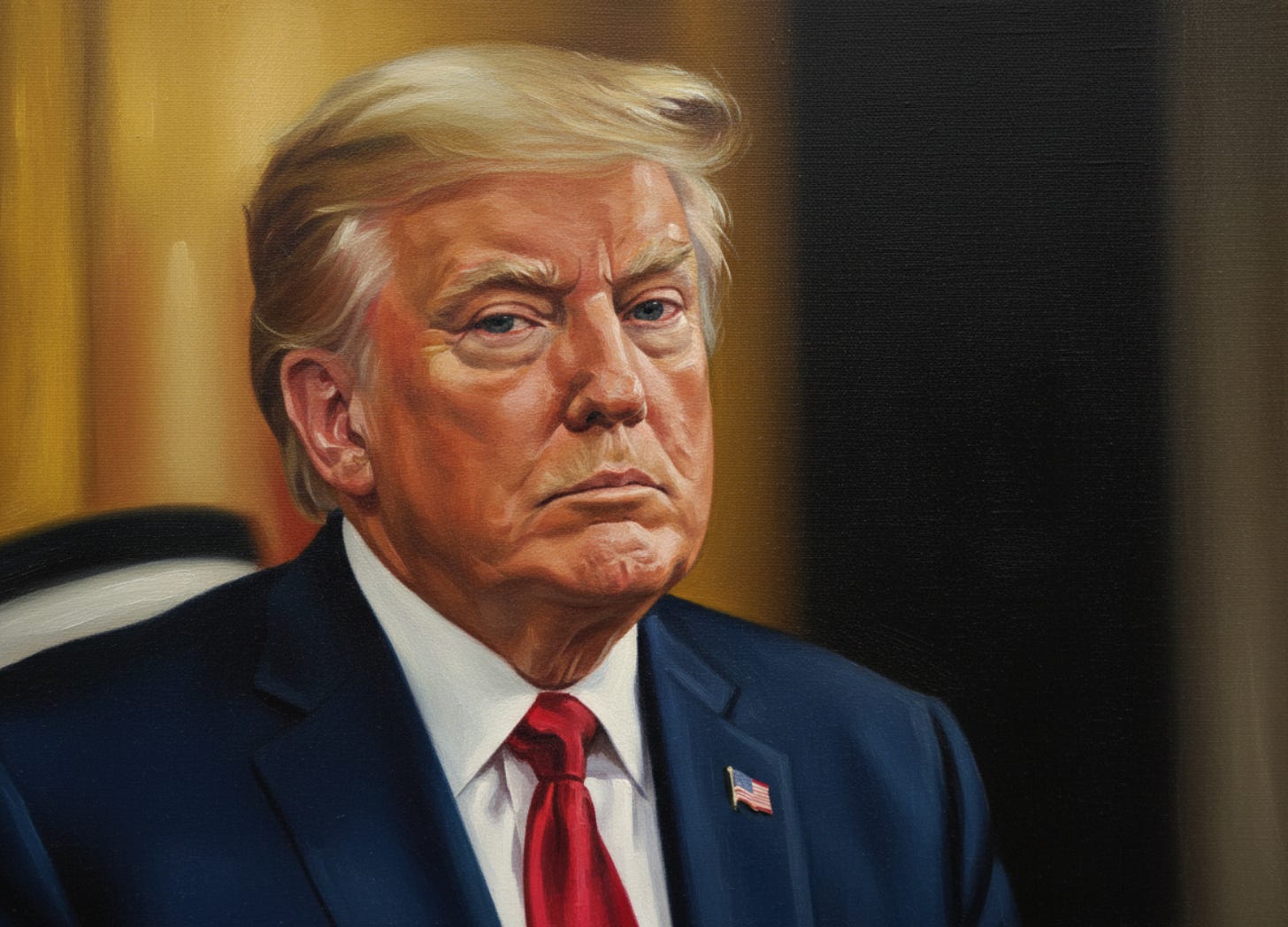
Donald Trump was reportedly kept out of the Situation Room during a high-stakes military operation. That is not a sentence you expect to write about a sitting president. But according to a report from The Wall Street Journal, that is exactly what happened.
And the reason why is more important than you may think.
When the President becomes the risk
There are moments when the presidency is supposed to function in its most traditional, serious form. A military crisis. A rescue mission. A downed American pilot in hostile territory. This is the scenario where the commander in chief is expected to be in the room, receiving real-time intelligence, evaluating options, and leading.
Instead, advisers made the extraordinary decision to keep Trump out entirely.
He was not delayed or unavailable. He was blocked.
The justification was not logistical. It was purely behavioral. Military officials were concerned that Trump’s impulsivity and temper would interfere with the operation. That is a remarkable assessment. In the middle of a sensitive extraction mission, the perceived risk was not only the enemy or the terrain. It was the president himself.
So aides created a buffer where information was filtered and updates were controlled. Trump was told only what advisers believed he needed to know.
That is not standard procedure. That is a containment strategy.
A Presidency managed, not trusted
While the operation was unfolding, Trump was reportedly in the West Wing, agitated and unfocused. Accounts describe hours of anger, fixation on unrelated grievances, and concern over how the situation would look politically if it went poorly.
At the same time, Vice President JD Vance and other officials were monitoring the mission.
Think about the dynamic that creates. The formal commander in chief is not leading the operation. The people around him are managing him.
This situation matters. Leadership implies trust in judgment. Management implies mitigation of risk.
The reported rescue itself was complex. Equipment issues, difficult terrain, and the constant possibility of escalation meant that even small disruptions could have serious consequences. In that kind of environment, clarity and discipline are essential. The conclusion reached by those in charge was that Trump’s presence would make those conditions harder to maintain.
The public image versus the private reality
Now contrast that with Trump’s public posture.
Publicly, Trump projects strength and control. He talks about destroying adversaries, ending conflicts decisively, and being fully in command of events. That messaging is familiar. It has been central to his political identity for years.
Privately, according to this report, the calculation inside the White House was very different. Keep him out so he does not interfere.
That gap between projection and reality is not just a communications issue. It speaks to how decisions are actually being made behind the scenes.
If advisers consistently view the president as someone whose involvement must be limited, then the structure of governance changes. The presidency becomes less about directing outcomes and more about containing volatility.
A pattern, not a one-off
It is tempting to view this as an isolated incident tied to a particularly sensitive mission, but the description fits a broader pattern.
The people around Trump are not relying on his judgment in critical moments. They are working around it. They are building systems to reduce the impact of his unpredictability.
That runs directly against the image Trump has cultivated of himself as a uniquely capable decision-maker. The “stable genius” framing depends on the assumption that his instincts improve outcomes. What this episode suggests is the opposite. His instincts are seen as liabilities to be managed.
And you do not make a decision like this lightly. Excluding a sitting president from the Situation Room during an active operation is extraordinary. It implies a level of internal consensus that his presence would create more risk than benefit.
How we got here
There is also a broader context to consider.
The current tensions with Iran did not emerge in a vacuum. Trump’s earlier decision to withdraw from the Iran nuclear deal in 2018 helped set the stage for the escalation we are now seeing.
At the macro level, that decision contributed to the instability. At the micro level, during this specific crisis, advisers concluded that the best way to handle the situation was to limit Trump’s involvement.
Those two layers connect. The same leadership style that drove earlier policy choices is now being managed in real time during the consequences of those choices.
What this signals for the future
Zooming out, this raises questions that go beyond one operation.
As Republicans look toward the future of the party and begin thinking seriously about 2028, Trump’s role will be a central issue. He remains a dominant public figure. But influence behind closed doors is a different matter.
If the pattern described here continues, it would not be surprising to see Trump gradually sidelined in key strategic conversations. Not necessarily in public, where his endorsement still carries weight, but in the rooms where decisions are actually made.
If advisers believe he adds little to a complex military operation, it is not a stretch to imagine similar judgments being made about political strategy.
The bottom line
The most striking part of this story is not the chaos or the rhetoric. It is the quiet decision-making.
In a moment that demanded leadership, the system responded by limiting the leader.
That tells you something important about how power is functioning right now.
We’re reaching over 150 million people every month across YouTube, podcasts, Substack, and beyond. But algorithms can change. Platforms can fold. And when that happens, this newsletter is how we stay connected.
If you’re not yet a paid subscriber, please consider joining.
If you’re already paid on one platform, consider supporting us on both Substack and our website.
You can subscribe on our website and right here on Substack.
And if you’re really on fire, consider gifting a subscription—we’ve got thousands on our waiting list ready to read, watch, and fight back.
Let’s keep building.
—David
PS: Can’t contribute right now? No problem. You can support us for free by subscribing on YouTube, listening to our audio podcast on Spotify or Apple Podcasts, or become a free subscriber to this very Substack. Every bit counts.
If that isn’t grounds for the 25th then I don’t freakin’ know what is.
That was an excellent call by the military. However, having ANY of his fucking regime involved with any of this is just as bad. Let the military take care of it and fuck these assholes.