

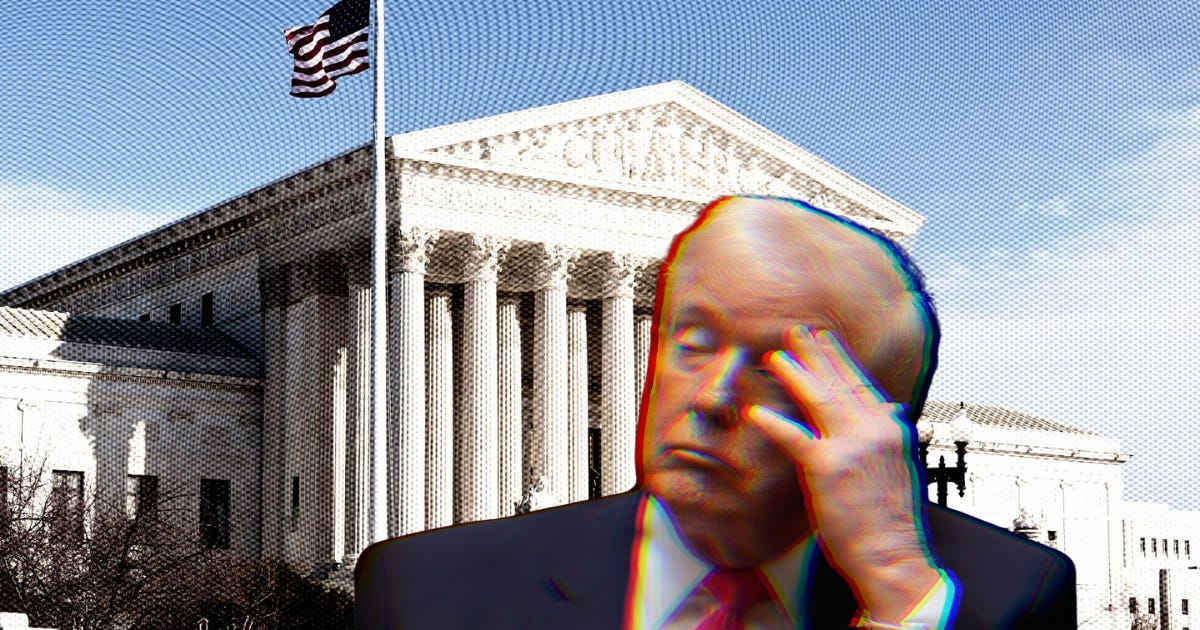
One of the most anticipated Supreme Court decisions of the year is now in, and it represents a significant defeat for Donald Trump.
Trump attempted to end birthright citizenship through executive order, arguing that children born in the United States to parents who are in the country illegally or temporarily should no longer automatically become American citizens.
The Supreme Court rejected that effort.
This case was about much more than immigration policy. It was about whether a president can simply decide that a constitutional protection no longer applies because he disagrees with it.
The Court’s answer was no.
That may sound obvious. It should be. But it is worth remembering that this case made it all the way to the Supreme Court in the first place, and three justices were prepared to side with Trump’s position.
That should give everyone pause.
Birthright citizenship is not some obscure legal loophole. It is established by the Fourteenth Amendment, which states that all persons born or naturalized in the United States, and subject to its jurisdiction, are citizens of the United States.
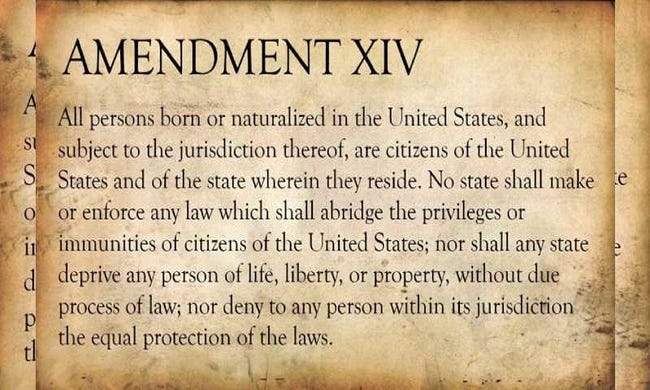
Opponents of birthright citizenship often focus on that phrase, “subject to the jurisdiction thereof,” arguing that it excludes children born to undocumented immigrants or to parents who are only temporarily in the country.
But that is not how the Constitution has been understood, nor how it has been applied.
The limited historical exceptions are well known. Children born to foreign diplomats, for example, are not automatically granted citizenship because diplomats are not subject to ordinary U.S. law in the same way everyone else is.
For virtually everyone else physically present in the United States, whether they are here permanently, temporarily, legally, or illegally, they remain subject to American law. They can be arrested, prosecuted, sued, and taxed. That is precisely why birthright citizenship has been understood to apply as broadly as it has for generations.
This is not a new legal question. The Supreme Court addressed it more than a century ago in United States v. Wong Kim Ark and affirmed that children born in the United States to non-citizen parents are citizens.
Trump nevertheless attempted to accomplish something through executive order that would have fundamentally changed who qualifies as an American citizen.
There is a larger point here that extends beyond this particular issue.
If someone believes birthright citizenship should be changed, our system provides a way to make that argument. There are constitutional processes for changing the law. They are intentionally difficult because constitutional rights are not supposed to change based on the preferences of whichever president happens to occupy the White House.
What is not supposed to happen is a president attempting to rewrite constitutional protections with the stroke of a pen.
Trump wanted this victory badly. He even attended oral arguments before the Supreme Court, something presidents rarely do. The investment made clear how important this issue was to him politically.
He did not get the outcome he wanted.
Instead, shortly after the ruling, Trump shifted attention elsewhere, celebrating separate Supreme Court decisions while largely avoiding this loss.


This case is also another reminder of why Supreme Court appointments matter so much.
Presidents come and go but Supreme Court decisions can shape American law for decades.
Every election carries consequences that extend far beyond the next four years. Judicial appointments are among the most lasting of them.
Many voters understandably become frustrated with the choices presented during presidential elections. Some stay home. Some decide there is no meaningful difference between the candidates.
The composition of the Supreme Court is one of the clearest examples of why those decisions matter.
Constitutional rights do not exist in the abstract. Ultimately, they depend on courts willing to uphold them when they are challenged.
This time, the Court rejected Trump’s attempt to redefine one of the country’s most fundamental constitutional protections.
The next time, the outcome may depend on who had the opportunity to appoint the justices hearing the case.
We’re reaching over 150 million people every month across YouTube, podcasts, Substack, and beyond. But algorithms can change. Platforms can fold. And when that happens, this newsletter is how we stay connected.
If you’re not yet a paid subscriber, please consider joining.
If you’re already paid on one platform, consider supporting us on both Substack and our website.
You can subscribe on our website and right here on Substack.
And if you’re really on fire, consider gifting a subscription—we’ve got thousands on our waiting list ready to read, watch, and fight back.
Let’s keep building.
—David
PS: Can’t contribute right now? No problem. You can support us for free by subscribing on YouTube, listening to our audio podcast on Spotify or Apple Podcasts, or become a free subscriber to this very Substack. Every bit counts.
What concerned me was the second note that he posted saying that limits on political spending were lifted!?!?!? As if we dont have enough money in politics already. Ps glad the 14th stood up.
It is hardly a win when 3 judges dissented and one additional judge dissected partially on a subject that should be very clear. What is frightening is that in reality we were one judge away the birthright citizenship being taken from us. Imagine that 47 gets to name another judge...