

Donald Trump’s allies are now openly discussing the possibility of imposing martial law if the upcoming midterm elections don’t produce the results they want.
That is an extraordinary sentence to have to write in the United States in 2026, but here we are.
We are talking about people with connections to the president discussing the use of military authority in response to an election they haven’t even lost yet. They are floating the possibility of seizing ballots, commandeering election equipment, and using emergency powers to interfere with the administration of elections.
And with the midterms just two weeks away, these conversations should be setting off alarm bells.
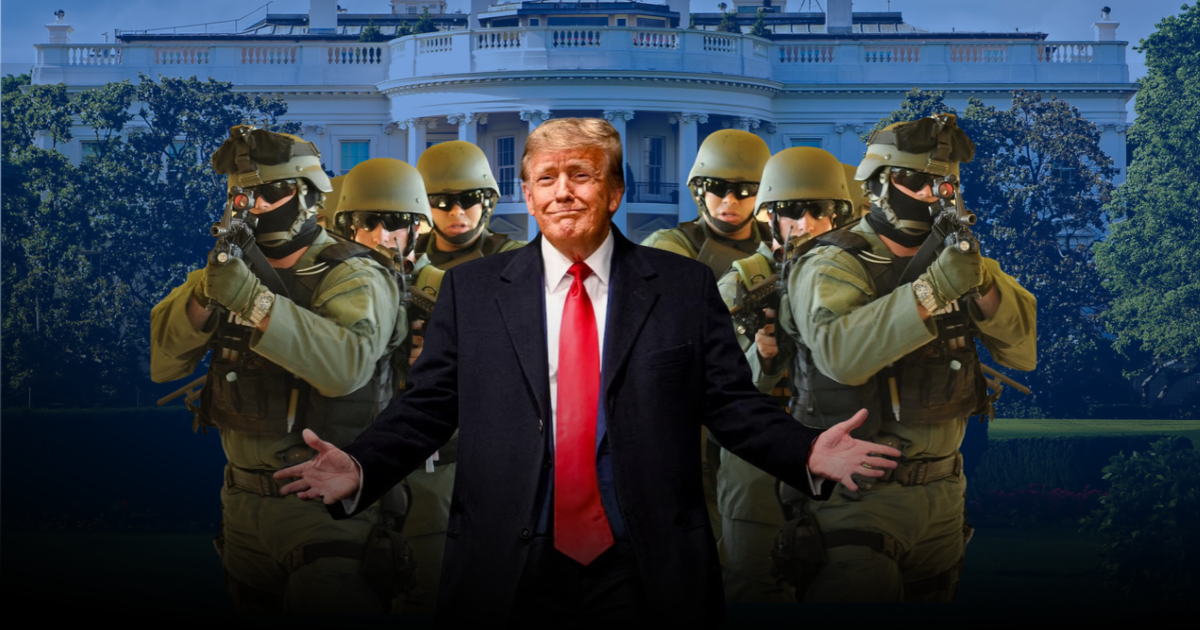
The martial law discussion is already happening
According to new reporting from Axios, a group of MAGA-aligned election activists held a video conference on September 30 to discuss what they anticipate will be widespread election fraud in November.
Now, there’s an immediate problem with that premise. We have not seen evidence of the kind of widespread election fraud these activists have spent years alleging. And yet, somehow, they’re already convinced the upcoming election will be rigged before a single vote has been counted.
Apparently, the evidence is so overwhelming that they don’t even need to wait for the election to happen.
Among the participants was Peter Ticktin, a childhood friend of Donald Trump and an attorney for Tina Peters, the former Colorado election official convicted of crimes connected to a breach of election equipment following the 2020 election.
This connection is particularly noteworthy because Ticktin and Peters visited Trump at the White House in June, and Peters has reportedly met with Trump again since then. These are people who have had direct access to the president.
During the September 30 call, Ticktin suggested that martial law might be necessary in the event of another supposedly rigged election. He also told Axios that ballots and election equipment might need to be commandeered and seized.
Another person on the call, Gregory Sandstrom, raised the possibility of pausing the election entirely over alleged security concerns. There was also discussion of Trump invoking emergency powers to force states to change their election procedures.
Think about what is being proposed here. An election takes place, Republicans potentially lose, and rather than accepting the outcome or pursuing legitimate legal challenges, activists connected to the president want him to intervene using extraordinary executive authority.
These are conversations about overriding the normal democratic process because one political movement might not like the outcome.
The Constitution doesn’t disappear because Republicans lose
There are established legal mechanisms for challenging election results. If there is credible evidence of fraud or irregularities, candidates can go to court, present that evidence, and seek appropriate remedies.
That process exists for a reason. Elections are complicated, mistakes can happen, and legitimate disputes deserve to be heard.
But the proposals being discussed by these MAGA activists go far beyond anything resembling a normal election challenge.
The president cannot unilaterally postpone congressional elections. States administer those elections under constitutional and federal legal frameworks. Donald Trump cannot simply declare martial law and take control of state election systems because he dislikes the results.
Emergency powers do not erase constitutional limits, regardless of how creatively the president’s allies might attempt to interpret them.
And it’s important to be precise about what we know. Trump has not publicly approved these specific proposals, and there is currently no evidence that he has decided to impose martial law following the election. His administration has maintained that its focus is on election security and counting legal votes.
But the fact that people with access to the president are openly discussing these possibilities is alarming on its own.
We have reached a point where extraordinary measures against the democratic process are being treated as reasonable subjects for political planning.
How authoritarianism becomes normalized
As we’ve discussed with experts who study authoritarianism, democratic institutions rarely disappear overnight. The process is gradual. Ideas that once seemed unthinkable become subjects of debate, then serious proposals, and eventually accepted political options.
Consider where we are today. Trump spent years promoting false claims about the 2020 election, and his allies are already predicting widespread fraud in November without evidence. Meanwhile, Heather Honey, who promoted false election claims, now holds a senior election integrity position at Homeland Security, and Peter Navarro continues pushing election conspiracy theories from within the administration.
Now, people connected to the president are openly discussing martial law in response to a potential Republican defeat. The message is increasingly clear: elections are legitimate when Republicans win, but when they lose, suddenly there’s a crisis requiring extraordinary intervention.
That is a dangerous precedent for American democracy.
The real test will be whether institutions hold
We don’t know whether Trump will embrace these proposals, but we do know how easily he can be influenced by those around him, particularly when they reinforce his existing grievances. And when those people are discussing martial law as a response to losing an election, there’s reason for concern.
The constitutional limits on presidential power are clear. The bigger question is whether those limits would be enforced if Trump attempted to exceed them. Would governors and state officials refuse unlawful demands? Would the courts intervene quickly enough?
These are questions we should never have to ask two weeks before an American election. Yet people with connections to the White House are openly exploring these possibilities anyway.
The strongest response is an overwhelming electoral victory
With the midterms approaching, voter registration efforts, election education, and legal preparations are underway to protect the process. But one of the strongest defenses against attempts to overturn the results is an overwhelming electoral victory.
If an election comes down to 11,000 votes, we know how Trump and his allies might respond. A victory by hundreds of thousands or millions makes it much harder to manufacture uncertainty or credibly challenge the outcome.
Of course, even a landslide can’t prevent false allegations or abuses of power. But as the possibility of significant Republican losses becomes more apparent, MAGA’s internal anxiety appears to be growing. And these discussions of martial law are unfolding against that very backdrop.
What happens when losing becomes unacceptable?
The timing of all this is revealing. The election hasn’t happened, no votes have been counted, and there’s no evidence of the widespread fraud these activists are already predicting. Yet people connected to Trump are discussing extraordinary measures to interfere with the process.
For years, Trump and his allies have encouraged supporters to treat electoral defeat as evidence of fraud. Now, some are considering increasingly extreme responses to the possibility of losing. We shouldn’t assume Trump will act on these proposals, but dismissing them simply because they’re unconstitutional would be a mistake.
The real test may come after the votes are counted, when we’ll see whether the institutions meant to protect democracy actually hold.
So what do you think? Are these martial law discussions an attempt to intimidate voters, or are Trump’s allies seriously preparing to challenge the election results by any means necessary?
We’re reaching over 150 million people every month across YouTube, podcasts, Substack, and beyond. But algorithms can change. Platforms can fold. And when that happens, this newsletter is how we stay connected.
If you’re not yet a paid subscriber, please consider joining.
If you’re already paid on one platform, consider supporting us on both Substack and our website.
You can subscribe on our website and right here on Substack.
And if you’re really on fire, consider gifting a subscription—we’ve got thousands on our waiting list ready to read, watch, and fight back.
Let’s keep building.
—David
PS: Can’t contribute right now? No problem. You can support us for free by subscribing on YouTube, listening to our audio podcast on Spotify or Apple Podcasts, or become a free subscriber to this very Substack. Every bit counts.
Trump openly encouraged his followers to cheat. If any group should be on alert for fraud it’s the Democrats. The Republicans cheated in Ohio in 2004. It’s old hat to them. If Michael Connell, GOP IT expert hadn’t (oops) died in a self-piloted plane crash he would have been deposed about the entire operation.
Yes the chief military staff should block trump’s attempts to interfere in an election
The rights guaranteed in the constitution are reason enough for the military to step in.