

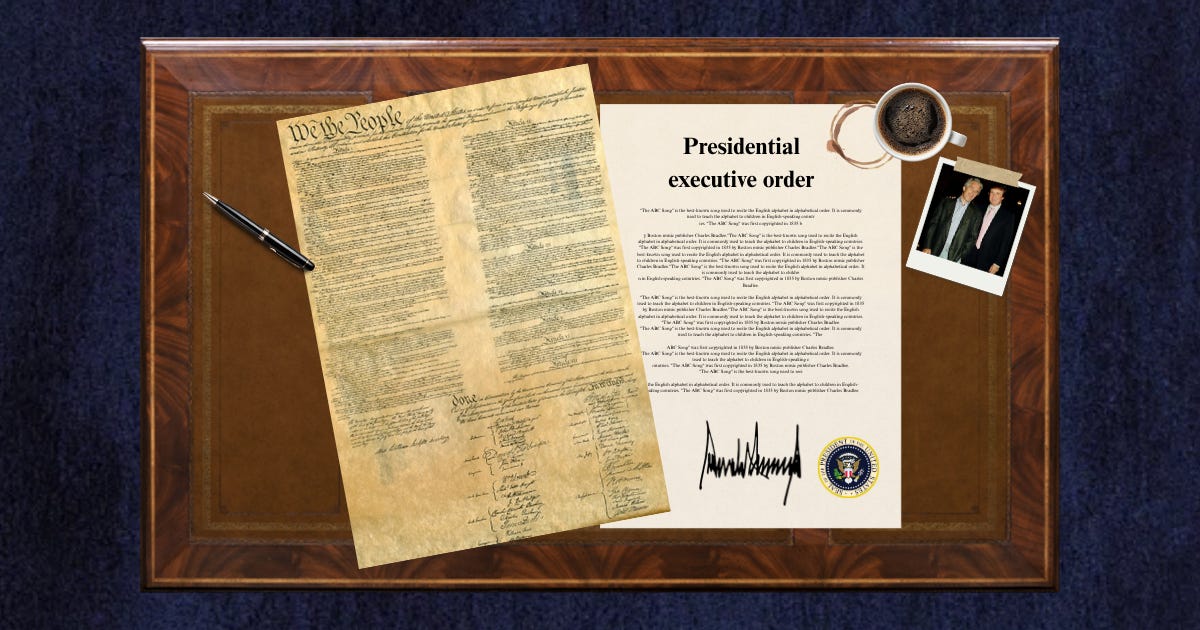
Donald Trump appears to be laying the groundwork for something that, in any healthy democracy, should set off alarm bells. Based on his recent rhetoric and the analysis of former Trump White House lawyer Ty Cobb, there is growing concern that Trump is preparing to declare some form of national emergency in the lead-up to the November midterm elections.
That sounds terrifying. It sounds authoritarian. It sounds like something pulled from the playbook of a country sliding away from democracy.
At the same time, it’s important to separate what is genuinely dangerous from what is legally possible. We should take the threat seriously without convincing ourselves that the president has powers he simply does not possess.
Why people are worried
Ty Cobb recently argued that Trump’s July 16 primetime speech was about more than rallying supporters. In his view, the speech was designed to create the justification Trump would later use to declare an emergency around the election.
That interpretation isn’t coming out of nowhere.
For years, Trump has insisted elections are rigged. He has attacked mail-in ballots, voting machines, voter registration systems, and repeatedly claimed widespread fraud without evidence. We have also heard discussions about federal agents near polling places, continued attacks on election officials, and Trump’s long-running obsession with seizing voting equipment dating back to his efforts after the 2020 election.
Taken together, those pieces create a pattern that deserves attention.
What an emergency declaration actually does
This is where it’s important not to let fear outrun reality.
Last week, voting rights attorney Mark Elias joined the program to explain something that often gets lost in these conversations: elections in the United States are run primarily by the states.
That means a president cannot simply declare an emergency and suddenly take over every ballot box in America.
The Constitution does not give the president authority to suspend state-run elections. Even declaring a national emergency does not magically create powers that do not already exist. States administer elections. State officials certify results. Local election workers count ballots.
Even during wartime, American elections have continued. Even in instances where martial law has been declared in parts of the country throughout history, presidents did not suddenly gain the ability to cancel elections nationwide.
Those constitutional guardrails still exist.
Chaos may be the real objective
None of this means there is nothing to worry about.
Trump could absolutely declare a national emergency. He could spend weeks flooding the public with conspiracy theories. He could encourage supporters to believe that any Democratic victory is fraudulent before a single vote is counted.
Federal agents could be deployed in ways designed to intimidate communities. Supporters could confront voters or election workers. Republican-controlled states could pursue restrictive voting policies, including proof-of-citizenship requirements or stricter voter identification rules that might affect turnout in competitive races.
Those scenarios deserve serious attention because they could influence close elections.
What an emergency declaration would not do is give Trump the legal authority to seize voting machines, discard ballots, or suspend elections across all 50 states.
To accomplish those outcomes would require illegal actions, not merely an emergency proclamation.
The system still depends on people
One of the most important points in all of this is that institutions are ultimately made up of individuals.
States can refuse unlawful directives. Courts can intervene. Election workers can continue counting ballots.
Federal law enforcement officers and members of the military still have an obligation to follow the law, not simply obey political orders.
Everything depends on how people respond if such a declaration is made. If enough people begin acting as though it changes the law, the consequences could be profound.
Constitutional crises develop when enough people decide to treat unlawful actions as lawful. One person may initiate the crisis, but it takes others choosing to go along with it for the crisis to take hold.
Democracy doesn’t run on declarations
If Trump ultimately crosses the line and attempts to use emergency powers to interfere with an election, it will not be the declaration alone that determines what happens next.
It will come down to governors, secretaries of state, attorneys general, judges, election officials, law enforcement, and ordinary citizens deciding whether they will follow the Constitution or follow one man.
That is why panic isn’t the appropriate response. Preparation is.
Lawyers like Mark Elias are already preparing for these possibilities. Election officials are preparing. States should be preparing. Voters should understand both the seriousness of the moment and the limits of presidential authority.
Trump can issue whatever declaration he wants.
The real question is whether the people around him choose to pretend that saying something makes it legally true.
So I’m curious what you think. Are our institutions strong enough to withstand that kind of pressure, or are you worried that enough people would go along with it to create real chaos? Let me know in the comments.
We’re reaching over 150 million people every month across YouTube, podcasts, Substack, and beyond. But algorithms can change. Platforms can fold. And when that happens, this newsletter is how we stay connected.
If you’re not yet a paid subscriber, please consider joining.
If you’re already paid on one platform, consider supporting us on both Substack and our website.
You can subscribe on our website and right here on Substack.
And if you’re really on fire, consider gifting a subscription—we’ve got thousands on our waiting list ready to read, watch, and fight back.
Let’s keep building.
—David
PS: Can’t contribute right now? No problem. You can support us for free by subscribing on YouTube, listening to our audio podcast on Spotify or Apple Podcasts, or become a free subscriber to this very Substack. Every bit counts.
He's trying to steal the election. That's what I think. He knows he's unpopular right now, and that's the only way he can stay in power.
I rue the day he ever got into politics.
He declared early on that we may never have to vote again. He always tells (brags) what is happening next. He has every intention of staying in power as long as he possibly can. He knows he will go to prison if he is no longer in charge. Hopefully he won’t last much longer.