

Before we get into it: if you’re receiving this via email, thank you. You’re already subscribed. If you’re not, now is the time.
There is growing evidence of a coordinated effort to control, shape, and potentially override election results if they don’t go Trump’s way.
Something extremely serious is happening right now.
And I worry that too many Americans are not paying attention.
Over the last several months, a pattern has come into focus. It is visible in statements, policy proposals, and political strategy. And taken together, it points toward something deeply concerning: a concerted effort to control, manipulate, and potentially override the results of the 2026 midterm elections if they do not favor Donald Trump and his allies.
This is not speculation pulled from thin air. It is based on observable behavior and explicit rhetoric.
Once you see the pattern, it becomes very difficult to unsee it.
The foundation: refusing to accept loss
Start with the most basic fact:
Donald Trump has still not accepted losing the popular vote in 2016. He has never accepted losing the 2020 election. And he has insisted that even in 2024, an election he won, the results would have been even bigger if it had been “fair.”
There is a consistent through line here. Loss is never legitimate. Victory is never large enough. The system is always suspect unless it produces the desired outcome.
That matters enormously heading into 2026.
If Republicans lose the House in the midterms, Trump’s legislative power collapses. Investigations resume. His presidency effectively stalls. So from his perspective, losing is not just a setback. It is an existential threat to his final years in office.
When someone has demonstrated over multiple cycles that defeat is unacceptable, you have to assume they will look for ways to prevent it.
Pillar one: “nationalizing” elections
Trump has openly floated the idea of what he calls “nationalizing” elections.
In the United States, elections are run by the states. We do not have one centralized federal voting system. We have 50 state-run systems operating under constitutional guidelines.
The idea of the federal government taking control of election administration would represent a dramatic departure from that structure.
Whether such a move would survive legal scrutiny is doubtful. But legality has not historically been a limiting factor in Trump’s proposals. The rhetorical groundwork is being laid regardless.
All you have to do is imagine how that authority might be used. Swing-state cities like Philadelphia, Atlanta, and Detroit would once again become the focal points. The emphasis would not be observation or auditing, it would be control.
And once control becomes the stated goal, the rest follows.
Pillar two: restricting access
The second component is more familiar.
Stricter voter ID requirements. Reductions in mail-in voting. Expanded authority to seize or purge voter rolls. Framed as “election integrity,” these proposals consistently have the same practical effect: reducing participation among voters more likely to support Democrats.
This is not a new strategy, but in combination with federal oversight rhetoric, it takes on a different character. It becomes less about tightening procedures and more about shaping outcomes.
When access narrows and authority centralizes, the margin for manipulation widens.
Pillar three: militarization and intimidation
There has also been talk, including from Trump allies, about deploying federal agents to “oversee” elections.
Consider the optics of federal immigration agents stationed near polling places in major cities. Even if no direct interference occurs, the psychological impact is obvious. Voters who fear harassment, questioning, or detention may decide the risk is not worth it.
Intimidation does not require physical force, it only requires uncertainty and fear.
That alone can suppress turnout.
The perception strategy
Beyond the mechanics of voting lies something even more powerful: perception.
For years, Trump and his movement have insisted that American elections are fundamentally rigged. That message has reached millions of people. Some believe it deeply.
Once distrust becomes the default setting, extraordinary actions can be justified in the name of “protecting” democracy.
Lose an election? Claim fraud.
Challenge certification.
Delay results.
Create legal chaos.
The prototype for this strategy was visible after the 2020 election. It failed, in part because key officials refused to go along with it.
The question now is whether those guardrails will hold again.
What happens after the votes are counted
Perhaps the most alarming possibility is not interference before the vote, but resistance after it.
There have already been suggestions from some Republican officials that they may refuse to seat winners if results are questioned. Even candidates who win could face challenges rooted in claims of illegitimacy.
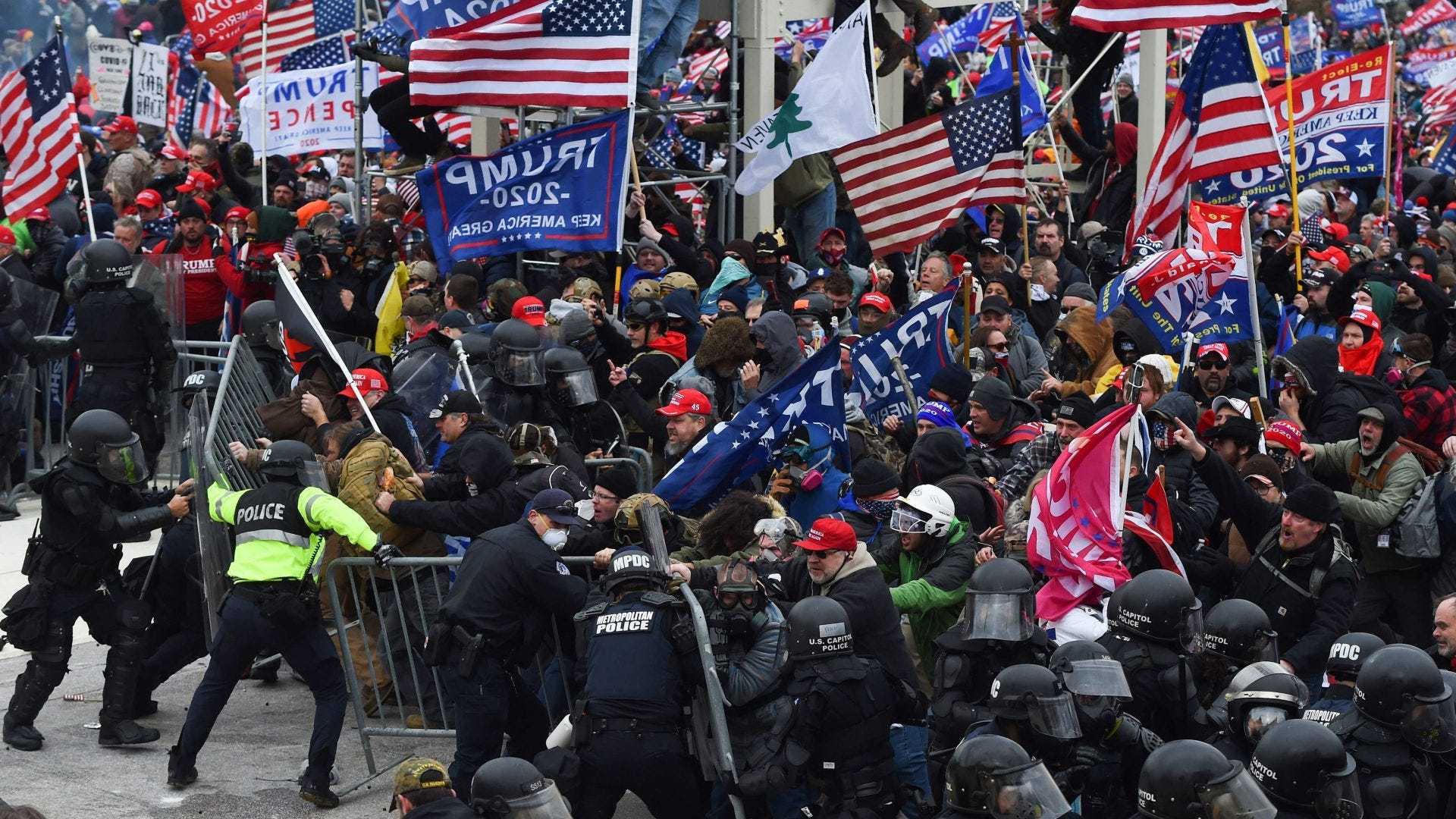
We saw elements of this approach during the certification fight that culminated on January 6th. The difference now is preparation. The rhetoric appears more organized. The groundwork more methodical.
Trump is not on the ballot in 2026, but his legacy and leverage are tied to the outcome.
If elections are close, disputes become easier to manufacture. And disputes create opportunities for delay, pressure, and negotiation.
Chaos is not a byproduct, it is a tool.
The structural risk
Democracy depends on a basic principle: losers accept that they lost.
When a political movement decides that losing is unacceptable and begins building mechanisms to avoid it, the system itself becomes vulnerable.
What makes this moment particularly dangerous is that it does not look like a dramatic overthrow. It looks procedural, administrative, and bureaucratic.
Rules change. Pressure builds. Public trust erodes.
Eventually, enough people may say, “If elections are rigged anyway, why not let him intervene?”
That is how erosion happens. Not all at once, but step by step.
The only real defense
If the margins are razor thin, disputes become plausible. If margins are overwhelming, disputes become absurd.
The tighter the results, the more oxygen there is for chaos. The wider the margin, the harder it is to sustain claims of illegitimacy.
We have now watched multiple election cycles in which the same pattern emerges: distrust the process, prepare for dispute, and challenge the outcome if necessary.
The threat does not announce itself as authoritarian. It presents itself as reform.
And that is precisely why it deserves attention now, not after ballots are cast.
The 2026 midterms are still months away but the groundwork for contesting them is already being laid.
This is not hysteria, this is pattern recognition.
Let me know what you think.
We’re reaching over 150 million people every month across YouTube, podcasts, Substack, and beyond. But algorithms can change. Platforms can fold. And when that happens, this newsletter is how we stay connected.
If you’re not yet a paid subscriber, please consider joining.
If you’re already paid on one platform, consider supporting us on both Substack and our website.
You can subscribe on our website and right here on Substack.
And if you’re really on fire, consider gifting a subscription—we’ve got thousands on our waiting list ready to read, watch, and fight back.
Let’s keep building.
—David
PS: Can’t contribute right now? No problem. You can support us for free by subscribing on YouTube, listening to our audio podcast on Spotify or Apple Podcasts, or become a free subscriber to this very Substack. Every bit counts.
He must be stopped,now.
Of course he does the pedo is a thieving narcissistic sociopath